Vacciner
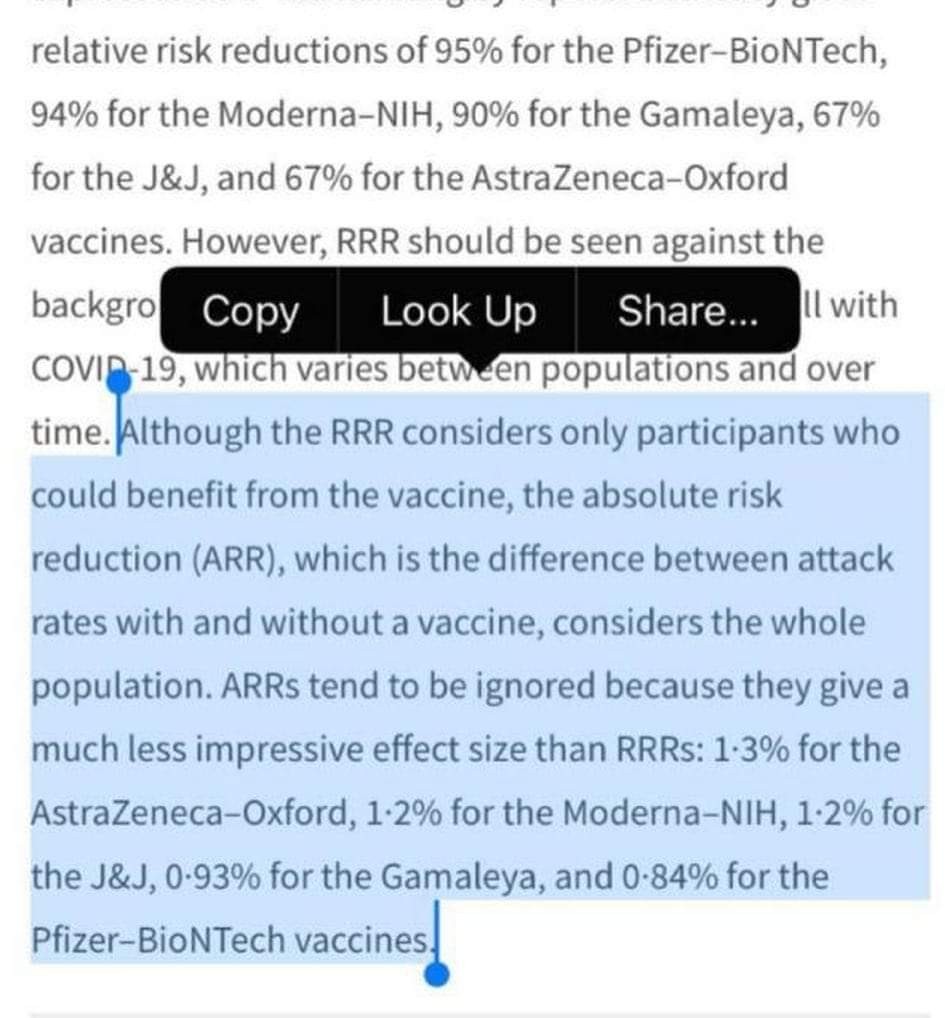
⚠️ BREAKING NEWS ⚠️‼️ The Lancet’s nye peer reviewed study ‼️ bekræfter vaxxine effektivitet, som ikke er i nærheden af 95%, som ellers påstået.Jeg har lyst til at sige, at det er sådan det går, når det er producenten selv, der undersøger disse ting. Hvis jeg havde produceret et produkt, jeg gerne ville sælge og promovere, så skulle jeg da nok sørge for, at jeg fik det til at fremstå så godt som muligt 💉Jeg er ingen ekspert, men min personlige vurdering er, at vi endnu engang er blevet ført bag lyset.Sandheden om effektivitet ser således ud:☠️ AZ = 1.3%☠️ M0derna = 1.2%☠️ J&J = 1.2%☠️ PfiSer = 0.84%Dette vil forklare hvorfor, at alle vaxxinerede fortsat bliver smittede. De har ført os bag lyset ved at rapportere RRR (Relative Risk Reduction) i stedet for ARR (Absolute Risk Reduction) ☢️Læs det fulde studie her:https://www.thelancet.com/journals/lanmic/article/PIIS2666-5247(21)00069-0/fulltext